
Dermatology, Laser and Skin Care
- Removal of unwanted hair on face and body
- Acne scar, wrinkles and sun spots treatment
- Botox injection for frownlines, neck bands and crows feet
- Psoriasis, vitiligo, and eczema phototherapy (UVB)
- Alopecia areata and hair loss treatment (intra-lesional injection)
- Revitalizing and rejuvenation of the skin (B-lift)
- IPL skin treatments using photo rejuvenation
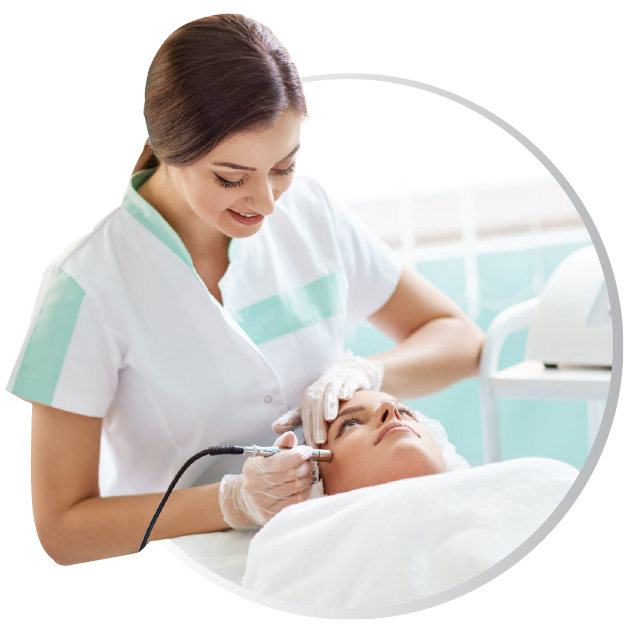
Put an end to slow, messy and painful methods of hair removal
Shaving, waxing, tweezing, depilation and smelly hair removal creams have been replaced by hair removal in a flash. The Ellipse system uses safe, visible light emitted from a flash-lamp to remove unwanted hair from all body sites in minutes.
How does Ellipse treatment work?
The visible light from the flashlamp is guided via glass prism to the hairy area.
Hair contains pigment (melanin) that absorbs the Light and converts it into heat. The hair transmits this heat into the hair follicle, which is then destroyed and rendered unable to produce a new hair.
To ensure optimal light transmission to the hair, a thin layer of gel (similar to that used in ultrasound examinations) is applied to your skin before treatment. The hand-held applicator is then slid over the entire treatment area by moving it exactly one applicator width after each flash of light.
Can all hairs be treated?
As the treatment relies on absorption of light in the hair pigment (melanin), the most efficient treatment is seen with dark hair. The lighter the skin, the more effective is the separation is between hair and skin colour, making treatment easier. However, the unique software of the Ellipse has pre-programmed settings for different hair and skin colours that adjust the energy output accordingly.
How long does an Ellipse treatment take?
The glass prism within the Ellipse applicator that guides the light to the skin is 1cm by 5cm, so a large number of hairs can be targeted in one flash of light. A facial treatment takes around 20 minutes, whereas a back or both legs take 60-120 minutes.
Does it hurt?
No anaesthetics are required, and most people describe the sensation as similar to that of a rubber band snapping onto the skin.
Do I need to take special precautions before and after treatment?
The light used is completely safe, visible light so no precautions are needed. However, it is important not to remove hair by epilation or waxing 4 weeks before treatment to ensure that as many hair follicles as possible contain a hair and thus can be destroyed by the light. Since tanning takes place by accumulation of pigment (melanin) in the skin, it is also important to avoid tanning before and during the treatment period. Otherwise your tanned skin will absorb more light, which makes treatment less effective.
Generally, no post-treatment care is necessary. But people with very sensitive skin may benefit from using a soothing cream for a few days after treatment. It is also recommended to limit sun exposure and to use sunscreen (min. SPF 20) for a few weeks following treatment.
How many Ellipse treatments do I need?
Hair growth is cyclical, as hair follicles go through resting and growing phases. Only follicles in the growth phase contain hair and are destroyed by the heat. Resting hair follicles need to enter the growth phase before they can be effectively destroyed by the Ellipse treatment. That’s why it is necessary to repeat the treatment at intervals until all hair follicles have been through the growth phase.
The length and timing of the growth cycles are affected by numerous factors such as body site, hair density, thickness, ethnic origin, hormonal status and age. Clinical studies have confirmed that at least 3-6 treatments are needed, and the intervals between treatments are typically 1-3 months.
Cosmetic BOTOX™
BOTOX™ is used for lines, wrinkles, excessive sweating as well as for pain.
BOTOX™ is the treatment of choice for upper facial wrinkles. When used appropriately it is one of the safest and most effective methods for smoothing lines and wrinkles. Many lines and wrinkles are caused by repeated folding of the skin from making the same facial expressions over and over again. These lines, like crow’s feet and forehead creases, are caused by the contraction of facial muscles under the nearby skin.